
New York Academy of Medicine boasts nearly 2,000 fellows across numerous areas of health and medical expertise. We are grateful for their wisdom, impact, and contributions towards healthier, longer lives for all.
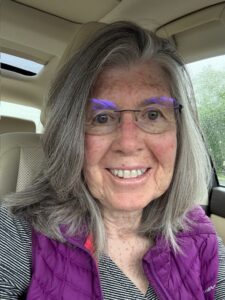
This blog is the first in a new series for New York Academy of Medicine: a profile of one fellow and their contributions in health and medicine. Just like our recent New Year’s Resolutions blog, this piece follows a question-and-answer format that either magnifies or introduces Regina Olasin, DO, FAAP, FACP. Dr. Olasin is New York Academy of Medicine Pediatrics Section Chair, and is also a fellow. She was kind enough to spend a few minutes with us to discuss how she entered the medical field, lessons she learned from both the HIV/AIDS epidemic and the Covid-19 pandemic, and her hopes for the future of professional medicine.
Some of Dr. Olasin’s answers have been lightly edited.
1. Please introduce yourself to our audience. Who are you, and what is your wor background in the health space?
I’m Regina Olasin; I’m currently retired. I had trained in internal medicine and pediatrics at the height of the HIV epidemic in Newark, NJ, and practiced for 37 years with multiple historically marginalized groups.
My last position was as chief medical officer in New York City at Care for the Homeless, which provided on site, federally-qualified health centers in the city shelters. I ended up working through 2023 and that was (during) the downturn of the pandemic. I sort of worked from epidemic to pandemic, I guess.
2. What or who do you credit for wanting to make this your career?
I was with my mother when she received devastating news from the primary care doctor that her sixth child, my youngest brother, was born with the same developmental disability as my other sibling. She was heartbroken. I remember vividly that I wanted to be the kind of doctor that didn’t make their patients cry. That was really the beginning of wanting to pursue medicine.
Unfortunately, I can’t say that I didn’t make any patients cry, but there was an interesting twist to the perspective of how I ended up practicing mostly with marginalized groups. A very significant chapter in my career was practice at a residential facility for the developmentally disabled in upstate New York.
It was an amazing healing experience for me with children from age five (to) adults up through 95, all of whom had been institutionalized for different reasons for many years.
I knew from my brothers that there’s so much that’s not appreciated in non-verbal populations, and it was (a) constantly humbling and heartwarming experience.
The non-clinical, non-transactional types of exchanges with patients have given me so much resilience through (hard) times and right now. Resilience, burnout, and moral fatigue are (unfortunately) common themes in discussion of practice with individuals in the health professions. I got my resilience from the patients on a daily basis.
3. You previously wrote to me that a physician’s definition of ‘writing’ doesn’t necessarily align with the type of writing that you are now interested in pursuing. Can you elaborate on what you mean?
In my retirement (I want) to write, and I have a recollection of heart-to-heart moments with patients over 37 years of practice.

I had this deep misapprehension because physicians document on a daily basis that I would be able to write just about different things. (I was) so incredibly wrong. Documentation is very objective and dictatorial. It’s all the things that anybody other than a physician or a lawyer would have no interest in reading.
I’ve been learning and unlearning (how to write) over the past 18 months. It’s a whole different approach to engaging someone; it requires showing, not telling, and the appropriate use of descriptors and action words. It’s vastly different from effective documentation.
[In] the first round of my rendition, my vignettes (were) read. Someone said, “Regina, this sounds like office visits.”
4. Working at the heights of the AIDS epidemic within internal medicine and pediatrics and then as a CMO on behalf of the unhoused population during the Covid crisis, sounds both very heavy and extremely important given the specific challenges these people were facing. What has been the source, or sources, of your resolve over the years?
My husband has been a wonderful supporter, listener, and believer. I’ve had very good friends, but my husband really comes to the top of the list. Also, the profession of medicine. I hope it remains a profession, and it doesn’t become a transactional trade with a lot of what’s going on right now.
There’s a peculiar camaraderie among physicians during extremely stressful times. To some extent there’s a selection process for people who are earnest, committed, competitive, and loners. There’s a lot of individual activity or information that (must) be assembled repeatedly to be able to work effectively. But, working in a team and sharing a lot of frustration is different. I felt that the day I was the most tired, hungry, (and) neglected was probably a good day compared to many of the people (in my care). During Covid there were individuals in shelter environments who were reassigned to vacant New York City hotels. But (there) was an incredible loneliness and isolation in being on call and responding to individuals who had no one to talk to.
(I would) get calls at odd hours of the night and early morning, and sometimes you could do something helpful, medically. A lot of times, it was a lonely person who desperately needed somebody to talk (with) and listen.
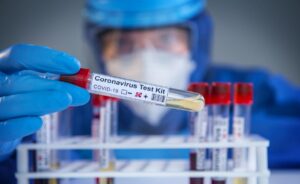
I was a senior physician on the outpatient side, and what was going on in major (medical centers) was vastly different. For the medical students and the residents that were being trained, I think (the Covid pandemic) had an everlasting impact on them. So much was not known, (but) we did know that nobody got better and that there was a downward spiral, especially early on. That led to incredible insights into (Covid) epidemiology and immunology.
HIV is a chronic illness. Now, nobody died from (it). They died from opportunistic infections and immunosuppression because of the virus. (This) is distinctly different from Covid, which caused a multi-system failure. We found an immunization which has prevented thousands of deaths.
Covid is still a serious disease because it keeps morphing and changing. Both diseases manifest somewhat differently in children than in adults. One of the biggest tragedies in my training was that I would do six months of pediatrics and six months of (internal) medicine and most of my pediatric exposure (was) in the NICU. There were multiple transfusions given to very low birth weight infants, and they’d do well and be discharged. It was before we knew about the blood transfusions’ potential contamination. Many of the children unfortunately would come back with opportunistic infections at 18 to 24 months.
5. It seems like helping the most vulnerable in our communities has been something of a calling card for you. Can you tell us why it’s so important to continue empowering disenfranchised people and communities?
If you look at the great institutions of healthcare, they are all surrounded by the poorest communities. I think the health of the communities over a generation or two has really not been impacted. (Regarding) the (houseless) population, housing is healthcare. I could come up with a lot of medicines and a couple of tests and a few specialists, but when someone doesn’t even have a place to store their medicines, they’re in a shelter and their health, for them, is not a priority.
There have been great steps made in working with developmentally disabled children. We have over 1,000,000 individuals who 20 years ago would not have seen their 14th birthday, but they are now turning 21. It’s because of excellent care coordination and a focus on quality of life for individuals with multiple disabilities.
(Statistically) someone who’s chronically homeless has a 10-year lifespan decrease compared to someone who has regular living arrangements. That speaks to things that we societally can do something about. Recognition probably needs to be the first step. Nutrition, stability, and early relational health (are all) absolutely critical.
In terms of bringing a child along and up to avoid (some negative) predictable outcomes, early relational health is critical and (so is) literacy. Every time a child comes for a well visit, they (could) have a book, and the parent (could) use the book as a tool. (Ideally), picture books in languages that are the same as the individual family with pictures of children that look like the child (are) simple and yet critical (details).
6. Is there anything else you’d like to share that I have not asked?
I feel incredibly fortunate to have practiced for 37 years. I’ve loved medicine, I still do. I like to think of retirement as a real passing the passing the baton. I think over time information becomes wisdom. The repetition of situations can give an insight that is multi-dimensional and different than a flat answer. I’m grateful for the opportunity to continue to be able to interact with younger physicians as they come through the profession.