
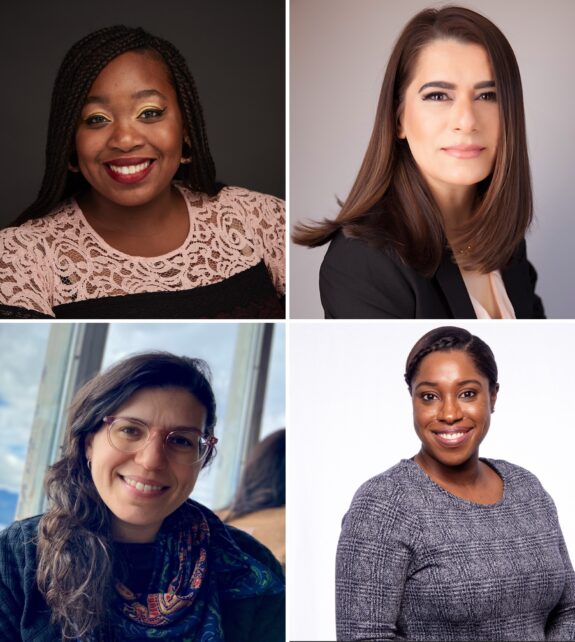
New York Academy of Medicine wishes our community, including you, dear readers, a happy and healthy new year! New Year’s resolutions date back to ancient history and past empires, but we want to share some relevant with you for 2026. Not just run-of-the-mill resolutions, but wishes for good health and personal growth from New York Academy of Medicine fellows and staff.
We reached out to several fellows and staff members, and hope their resolutions move you in the way they did for us. From empowering underserved health organizations to demonstrating how nursing history relates to the current healthcare workers, these ambitious goals might help you to determine a new goal for you to reach in 2026. Enjoy this question-and-answer formatted blog, where you’ll learn more about three of our fellows and a staff member before they share their New Year’s resolutions.
1. Please introduce yourself to our audience. What do you do, and where do you work?
Olga Kagan, PhD, RN, Chair of the Nursing Section and Fellow at New York Academy of Medicine
 My name is Dr. Olga Kagan, and I am a registered nurse with over 25 years of experience spanning critical care, outpatient care, research, academia, for-profit and nonprofit leadership. Innovation & informatics are central to my work, particularly in advancing AI literacy and designing collaborative solutions that elevate patient and nurse voices. I serve as Founder and President of the Food Allergy Nursing Association (FANA), Associate Adjunct Professor at City University of New York (CUNY) SPS and Molloy University, President‑elect of the Society of Nurse Scientists, Innovators, Entrepreneurs & Leaders (SONSIEL), and Chair of the Nursing Section at New York Academy of Medicine. I focus on building bridges across disciplines to strengthen patient‑centered care and support nurses in every setting.
Sindy Louisma, New York Academy of Medicine Fellow:
My name is Sindy Louisma, and I am a healthcare leader currently serving as Associate Director of Clinical Operations at Mercy University School of Nursing. My work focuses on strengthening student success, advancing health equity, and supporting teams that serve diverse and underserved populations. I am also pursuing a Doctor of Healthcare Administration to further enhance my ability to lead and positively contribute to health system transformation.
Ashley Graham-Perel, EdD, RN, NPD-BC, MEDSURG-BC, CNE, FADLN, New York Academy of Medicine Fellow:
Greetings everyone! I am Dr. Ashley Graham-Perel, Assistant Professor of Nursing and Director of the Office of Engagement and Community Affairs at Columbia University School of Nursing. I am a nurse educator and historian whose work centers on advancing health equity and strengthening the nursing workforce. As a historian, I study the contributions of nurses, particularly those whose work has been overlooked in traditional narratives, to better understand how history shapes the structures, practices, and inequities we see in health care today.
Maya Scherer, MPH, Director of the Center for Evaluation and Applied Research (CEAR) at New York Academy of Medicine:
I am the Director of CEAR at New York Academy of Medicine. In my role, I oversee a group that works collaboratively with partners to assess programs that aim to improve health and well-being, generating the data they need to improve services and outcomes for the communities they serve. We also work with local health departments and hospitals to conduct research that incorporates community voices into program development and decision making. Our work is grounded in collaboration and adaptability, and over my 11 years at CEAR, this approach has yielded rich and valuable data, and many wonderful working relationships across New York City and beyond.
2. What is the most rewarding aspect of your role with New York Academy of Medicine?
Dr. Olga Kagan, Chair of the Nursing Section and Fellow at New York Academy of Medicine:
I joined New York Academy of Medicine in 2013 as a student and have grown within the Academy as a member and eventually as a Fellow. Over the years, I’ve co‑organized the annual informatics workgroup conference, now part of the Section on Artificial Intelligence, led by Dr. Keith Weiner, and collaborated across sections to host programs on AI, lifestyle medicine, social media literacy, and health justice. As Nursing Section Chair, I worked with New York Academy of Medicine leadership to help launch a communication board that enables members to connect, collaborate, and share opportunities and have expanded my ability to pursue interdisciplinary work and build meaningful partnerships across the health ecosystem.
 Sindy Louisma, New York Academy of Medicine Fellow:
Being both a member and a fellow of New York Academy of Medicine has been an honor and a valuable source of professional growth. New York Academy of Medicine has provided opportunities to engage with interdisciplinary leaders, scholars, and advocates who are deeply committed to improving population health. Through this community, I have been able to exchange ideas, build lasting relationships, and participate in important conversations that extend beyond my day-to-day role.
Dr. Ashley Graham-Perel, New York Academy of Medicine Fellow:
Becoming a Fellow of the New York Academy of Medicine has been an opportunity to bring nursing history into broader conversations about health equity, systems change, and public policy. New York Academy of Medicine’s mission deeply aligns with my work as a historian examining how structural inequities evolved over time and how lessons from history can inform the future of nursing and health care. The Academy’s interdisciplinary community has allowed me to collaborate with scholars, clinicians, educators, and policymakers who are similarly committed to advancing justice in health. These relationships have opened space for new collaborations, broader conversations about structural inequities, and innovative approaches to education and practice that I may not have encountered otherwise.
3. What is the most rewarding aspect of your work?
Dr. Olga Kagan, Chair of the Nursing Section and Fellow at New York Academy of Medicine:
The most rewarding part of my work is creating spaces where patients, nurses, and researchers can learn from one another and drive meaningful change. I’m especially excited by our upcoming February 11th event, where we will view a compelling documentary where patients and caregivers share their lived experiences with food allergies followed by an interdisciplinary panel discussion to help us guide safer, more compassionate care. I also find great joy in supporting emerging nurse scholars through our annual Forum on Inter-Collegiate Regional Events (FIRE) for Nursing Doctoral Students and Faculty event, which continues to grow and highlight the next generation of nurse researchers and leaders.
Sindy Louisma, New York Academy of Medicine Fellow:
The most rewarding aspect of my work is knowing that the decisions and initiatives I help shape can positively impact patient outcomes and community well-being. I find great fulfillment in mentoring others, amplifying underrepresented voices, and working toward healthcare systems that are more equitable and compassionate. Witnessing real-world impact reinforces the purpose behind my work.
Dr. Ashley Graham-Perel, New York Academy of Medicine Fellow:
The most rewarding part of my work is witnessing transformation, whether it’s a student gaining confidence in their clinical judgment, a nurse leader stepping into their voice, or a program meaningfully improving the care delivered in historically marginalized communities. Knowing that my work contributes to both individual growth and broader system change keeps me grounded and inspired.
Maya Scherer, MPH, Director of CEAR at New York Academy of Medicine:
One of the things I get to do in my work is to provide evaluation training and technical assistance to community-based organizations with limited resources. I love sharing evaluation knowledge and brainstorming evaluation approaches that can provide usable information within a real-world context.
4. What is your professional New Year’s resolution? Or, what do you hope to see this year relating to health outcomes in your community?
Dr. Olga Kagan, Chair of the Nursing Section and Fellow at New York Academy of Medicine:
My professional New Year’s resolution is to deepen interdisciplinary collaboration that strengthens health equity, AI literacy, and patient‑centered care along my Nursing leadership team colleagues, Dr. Ellen McCabe and Dr. Angela Appiah. I hope to see continued progress in how healthcare professionals listen to and act on patient narratives, especially in areas like food allergy safety: an invisible disability that impacts 33 million Americans, where lived experience is essential to improving outcomes and quality of life. My leadership roles across several organizations help me build bridges between nurses, patient advocates, and digital innovation partners to advance this work as well as mentor and amplify the voices of my colleagues. This is especially important now, as we navigate major technological transformations in healthcare; a moment when keeping human needs at the center matters more than ever.
Sindy Louisma, New York Academy of Medicine Fellow:
My professional goal for the new year is to continue advancing leadership that prioritizes equity, prevention, and community-informed care. I hope to see improved access to high-quality healthcare for marginalized populations and stronger cross-sector collaboration to address social determinants of health. Sustainable and impactful change occurs when communities are actively engaged as partners in solutions.
Dr. Ashley Graham-Perel, New York Academy of Medicine Fellow:
 My professional resolution is to continue bridging nursing history with contemporary workforce development. I hope to see growing recognition that history is not separate from practice, but essential to understanding trust, access, power, and belonging in health care. My goal is to deepen partnerships with community-based organizations so that our work remains grounded in lived experience while honoring the historical context that shapes it.
Maya Scherer, MPH, Director of CEAR at New York Academy of Medicine:
In 2026, I want to work on expanding our capacity to provide evaluation support and resources to organizations with limited funding.
5. Do you have a personal New Year’s resolution, such as picking up a new hobby or going to a bucket-list destination?
Dr. Olga Kagan, Chair of the Nursing Section and Fellow at New York Academy of Medicine:
On a personal level, I hope to create more intentional time with my family, especially as I celebrate two seniors this summer, one in high school and one in college, who will be preparing for their next chapters. I also want to stay active in my book club, a community of women who inspire me with their curiosity and love of literature, which closely aligns with my goal to finally explore the extraordinary historical collections (at the New York Academy of Medicine Library), especially knowing that many popular books, including the famous Harry Potter series, draw on centuries‑old medical texts and Latin botanical terminology that are rooted in reality.
Sindy Louisma, New York Academy of Medicine Fellow:
My personal resolution is to be more intentional about rest and balance while continuing to grow professionally. As I navigate leadership responsibilities and doctoral studies, I hope to create more space for reflection, family, and wellness. Maintaining this balance allows me to be more present and effective in all areas of my life.
Dr. Ashley Graham-Perel, New York Academy of Medicine Fellow:
As many of us around this time of year, I have several resolutions (some that have rolled over from last year). Personally, I am prioritizing faith, rest, joy, and time with the people who matter most: my family. I’m also hoping to explore a few new travel destinations this year, places that offer both cultural history and time in nature. Finding balance outside of work allows me to show up more fully in the work I care so deeply about.
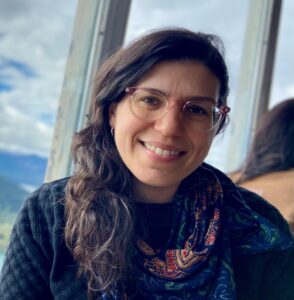 Maya Scherer, MPH, Director of CEAR at New York Academy of Medicine:
I love ceramics and have taken a few pottery classes over the years but have only ever taken classes that focus on using a pottery wheel. This year, I’d like to learn how to do hand building and see what new creations I can make!
What’s Next?
We hope you think these professional and personal resolutions are both interesting and inspirational. If you are comfortable sharing your resolutions, whether they are regarding health, professional goals, or personal pursuits, we would love to hear from you; please reach out to Max Mallet, our marketing content manager, at [email protected]. New York Academy of Medicine wishes you and yours a happy new year and healthier, longer lives for all.